
Copper T Insertion in Thane
Enjoy peace of mind with a long-term birth control solution. Dr. Nikita Kulkarni provides copper T insertion in Thane with a gentle, patient-focused approach and personalised guidance. Schedule your consultation today and find the contraceptive option that best suits your lifestyle and future plans.
What Is a Copper-T (IUD)?
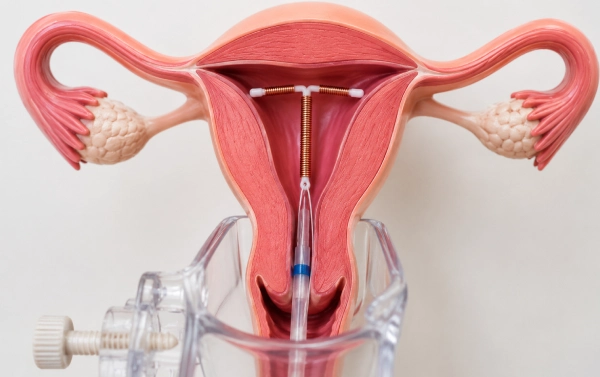
A Copper T is a hormone-free intrauterine contraceptive device (IUD) that is inserted into the uterus to provide long-term pregnancy prevention. It is a T-shaped, flexible and thin plastic device wrapped with fine copper wire and is inserted into the uterus by a gynecologist. Its shape helps it remain securely in place, providing reliable contraception for several years.
How Does a Copper-T Work?
The Copper T works by releasing copper ions into the uterus after it is inserted. Copper ions impair sperm motility and function, reducing the likelihood of fertilisation. The primary contraceptive effect of the Copper T occurs before fertilisation takes place.
Who Is a Suitable Candidate for Copper-T Insertion?
A Copper T may be a suitable contraceptive option for women who:
- wish to delay pregnancy for the time being
- prefer a long-term, reversible method of contraception
- do not have an active pelvic infection
- prefer a hormone-free birth control option
- have no known abnormalities of the uterus that may interfere with Copper T placement
When May a Copper-T Not Be Suitable
A Copper T may not be suitable for women who:
- are currently pregnant or planning for pregnancy.
- already have an intrauterine contraceptive device (IUD) in place.
- have certain types of cancers affecting the reproductive organs or structural abnormalities of the uterus that may interfere with Copper T placement.
- had a uterine infection after childbirth or abortion within the last three months.
- have Wilson’s disease or a copper allergy.
- have genital actinomycosis.
have a sexually transmitted infection or an active pelvic infection - unexplained vaginal bleeding that has not yet been evaluated
How Is a Copper-T Inserted?
A Copper T is usually inserted through a simple outpatient procedure that includes the following steps:
- A Copper T can usually be inserted at any time during the menstrual cycle if pregnancy can be reasonably excluded. However, your gynecologist will decide the most suitable time for the procedure.
- The device is placed inside the uterus during a short clinic visit that typically takes only a few minutes.
- After insertion, women are advised to become familiar with checking the strings periodically, or to contact their doctor if they cannot feel them or if they seem significantly longer or shorter than before.
- The Copper T provides contraceptive protection immediately after insertion.
- Insertion may cause brief cramping, which is normal.
- For the first 3-6 months, some women may experience heavier and prolonged or more painful bleeding after the procedure. These symptoms often improve over time.
What to Expect After Copper-T Insertion
Post Copper T insertion, there might be a few temporary changes that your body goes through while it gets used to the new intrauterine device and these include:
- Slight pain or cramping may be felt in the lower abdomen.
- Vaginal spotting or bleeding.
- Back pain.
- Dizziness.
For a comfortable recovery after the procedure, make sure to:
- Get adequate rest for the rest of the day if required.
- Take pain relief medications as suggested by your gynaecologist.
- Use a heating pad for cramping
- Wear panty liners for spotting
Benefits of a Copper-T
A Copper T offers several advantages, including:
- Provides dependable, long-term contraception.
- Works without releasing hormones into the body.
- Requires very little maintenance after insertion.
- Eliminates the need for daily or frequent contraceptive use.
- Fertility usually returns once the device is removed.
- Highly effective (>99%) with typical use once inserted.
- Reversible contraception.
- When inserted within 5 days of unprotected intercourse (or within 5 days of ovulation in selected cases), Copper T is also the most effective form of emergency contraception.
Possible Side Effects and Risks of Copper-T Insertion
Common side effects
- Mild cramping or back pain after insertion.
- Light spotting between periods.
- Heavier, longer, or more painful menstrual periods, especially during the first few months after insertion.
Rare complications
- Expulsion, where the Copper T partially or completely comes out of the uterus.
- Uterine perforation (rare), where the device passes through the wall of the uterus during insertion.
- Pelvic infection, with a small increased risk during the first 20 days after insertion.
- Contraceptive failure, which may result in pregnancy despite the device being in place. If pregnancy occurs with a Copper T in place, there is a higher likelihood of it being an ectopic pregnancy than a typical pregnancy, although the overall risk of pregnancy is very low.
Important Notes
Copper T does not protect against sexually transmitted infections (STIs), so condoms may still be needed for STI prevention.
When Should You Seek Medical Advice After Insertion?
Contact your gynaecologist after copper T insertion if you:
- Suspect the device has shifted or come out.
- Notice unusual vaginal discharge.
- Experience severe lower abdominal pain or persistent cramping that does not improve.
- Cannot feel strings
- Strings suddenly become much longer or shorter
- Positive pregnancy test
- Fever or chills
- Severe pain
- Heavy vaginal bleeding
When Can a Copper-T Be Removed?
The Copper T can be removed at any time by a gynecologist if you no longer need it or if removal is recommended for a medical reason. The gynecologist will remove the Copper T during a clinic visit. In most cases, it can be removed at any time during your menstrual cycle. Removal is usually quicker than insertion.
How Is a Copper-T Removed?
Copper T removal is a simple outpatient procedure that usually involves:
- A pelvic examination to access the cervix.
- Placement of a speculum to view the Copper T strings.
- Gentle removal of the device using a medical instrument.
- Brief cramping or light spotting may occur, and fertility typically returns soon after removal.
What to Expect After Copper-T Removal?
After Copper T removal, you may experience:
- Temporary mild cramping or slight spotting may occur.
- A quick return to your usual daily activities.
- Immediate restoration of fertility.
- Gradual return of your natural menstrual pattern if it had changed during Copper T use.
Can You Get Pregnant After Copper-T Removal?
Yes, because pregnancy is possible even shortly after the removal of Copper T, since it does not affect ovulation and thus fertility.
- Fertility usually returns immediately after Copper T removal.
- Some women may conceive during their first ovulation after removal, although the time taken to conceive varies depending on factors such as age and overall reproductive health.
How long does Copper T last?
- Copper T 380A : Up to 10 years
- Multiload 375 : Up to 5 years
Follow-up:
- No routine follow-up necessary unless symptoms develop.
- Review after the first menstrual cycle if needed.
- Women should seek medical review earlier if symptoms develop.
Can a Copper T be used while breastfeeding?
Yes. A Copper T can generally be used safely during breastfeeding after appropriate medical assessment. Copper T does not affect breast milk production.
Dr. Nikita Kulkarni’s Approach to Copper-T Insertion and Removal
Dr. Nikita Kulkarni’s approach to Copper T insertion and removal includes:
- Careful evaluation of counselling regarding all suitable contraceptive options.
- Gentle, patient-centred insertion and removal procedures.
- Clear counselling before and after the procedure.
Book a consultation with Dr. Nikita Kulkarni, an experienced gynecologist in Thane, for expert guidance on Copper T insertion or removal.