Table of Contents
Pregnancy is an exciting journey, but the early weeks can also bring unexpected symptoms. Nausea and vomiting, commonly known as morning sickness, affect many women during the first trimester and can range from mild discomfort to symptoms that interfere with daily life. Many women develop food aversions, increased sensitivity to smells, or persistent nausea that can occur at any time of the day.
Nausea and vomiting are extremely common during the first trimester and are usually related to the normal hormonal changes of early pregnancy. For this reason, it is very necessary to find out what causes these changes and how to cope with them.
Morning sickness can occur at any time of the day despite its name.
Dr Nikita Kulkarni, an Obstetrician and Gynaecologist in Thane, stresses the need to monitor pregnancy symptoms and obtain medical advice once they start disturbing everyday life.
Why These Symptoms Commonly Occur In The First Trimester
During the first trimester, there will be significant changes in hormone levels, which support the early stages of pregnancy.
During early pregnancy, rising levels of hormones such as human chorionic gonadotropin (hCG) and oestrogen may contribute to symptoms such as nausea and vomiting.
However, these fluctuations of hormones have different effects on women. Some women might feel minor discomfort, while for some, their activities are affected by these symptoms.
Symptoms often begin around 5–6 weeks of pregnancy, peak between 9–12 weeks, and gradually improve by the second trimester in most women.
Pregnant women carrying twins or multiple pregnancies may sometimes experience more severe symptoms because of higher hormone levels.
How Changes In Smell Sensitivity Affect Daily Life
Most pregnant ladies have increased smell sensitivity during pregnancy. Common smells that were previously ignored might trigger vomiting and nausea in early pregnancy because of the increased smell sensitivity.
Food smells, strong scents, and certain cleaning products can trigger or worsen morning sickness symptoms during the first trimester of pregnancy. It is important to identify those specific smells that cause nausea.
Common triggers may include
- Pungent cooking odours
- Scents and perfumes
- Deep-fried foods
- Cleaners and sprays
- Cigarette smoke
The Connection Between An Empty Stomach And Nausea
Long intervals between meals can worsen the symptoms. Prolonged periods without eating may result in fluctuations in blood sugar levels, as well as worsening of nausea.
Consuming small portions of food throughout the day may help reduce nausea and prevent symptoms from worsening. It is a very common piece of advice for women dealing with morning sickness during pregnancy.
How Prenatal Vitamins May Contribute To Stomach Discomfort
Prenatal Vitamins offer the necessary vitamins that benefit the mother and baby. There are women who experience stomach irritations or nausea upon consumption of particular vitamin supplements.
Taking prenatal vitamins with food or at bedtime may help reduce stomach discomfort in some women.
Some individuals may experience gastrointestinal side effects, such as stomach discomfort, when taking iron-containing vitamin supplements.
The Benefits Of Eating Smaller Meals Throughout The Day
Large meals can place additional strain on a sensitive digestive system. Smaller, more frequent meals may be easier to tolerate during the early stages of pregnancy.
When experiencing nausea and vomiting during early pregnancy, eating small meals or snacks every few hours may help reduce discomfort and maintain energy levels.
Helpful meal strategies include
- Consuming five to six small meals
- Selecting simple foods that are easily digestible
- Avoiding gaps between meals
- Having healthy snacks easily available
Why Plain Foods Often Feel Easier To Tolerate
Bland, easily digestible foods are often better tolerated during episodes of nausea. Women tend to take such food temporarily to alleviate their symptoms.
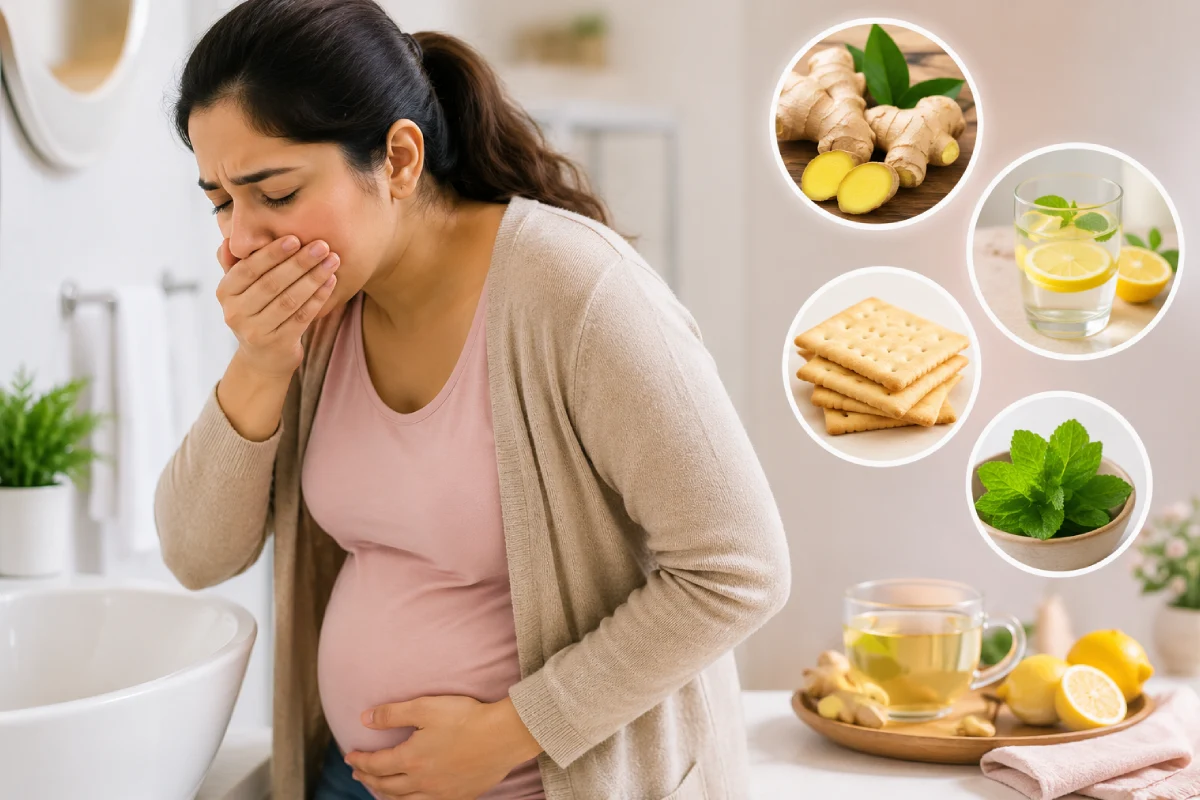
Crackers, dry toast, plain rice, khichdi, bananas and plain cereals are common food choices for women experiencing nausea during early pregnancy. Having crackers beside the bed will be helpful for symptoms that happen before getting up in the morning.
Staying Hydrated During Difficult Days
Water is a very important element during your entire pregnancy period. Frequent vomiting during pregnancy often causes dehydration making adequate fluid intake particularly important during pregnancy.
For women who cannot take plain water, it may help to consume fluids so as not to cause nausea. Smaller sips of fluids may be helpful as well.
Some hydration options include
- Coconut water
- Clear broths
- Diluted fruit juices
- Ice chips
- Cold water in small amounts
- ORS
- Lemon water
How Ginger May Help Soothe The Stomach?
Ginger has been a favourite remedy for digestive issues.
Pregnant women have realized the benefits of ginger and have included ginger products in their daily diet.
Ginger tea, ginger candies, and light ginger-containing drinks are considered as the pregnancy nausea remedies. Everyone responds differently, and so it is useful to find out which works for you.
Identifying Foods and Situations That Trigger Symptoms
There are some foods and conditions that might contribute to nausea. By noticing certain patterns, women can determine what the triggers are and make proper adjustments.
Greasy foods, very spicy foods, and smells are usually related to worsening symptoms. By avoiding these triggers, women might be able to gain better control over their symptoms.
Recognizing When Symptoms Require Medical Attention
Most instances of morning sickness during pregnancy experienced by pregnant women resolve gradually over time. There are some women who will suffer from nausea to an extent that it interferes with their nutrition and hydration.
It might be necessary for a medical assessment to be done if the conditions persist and are difficult to handle.
Warning signs may include
- Inability to keep food down
- Inability to retain fluids
- Passing very little or dark-colored urine
- Significant weight loss
- Persistent dizziness
- Reduced urine output
- Fainting
- Inability to take prescribed medications
- Vomiting blood (rare)
Understanding Severe Pregnancy-Related Vomiting
Some women develop an illness referred to as Hyperemesis Gravidarum. Hyperemesis gravidarum is a severe form of pregnancy-related nausea and vomiting that may lead to dehydration, weight loss, and nutritional deficiencies and sometimes requires hospital treatment.
Hyperemesis gravidarum may occasionally require intravenous fluids, medications, or hospital admission.
Early detection prevents problems caused by dehydration and lack of proper nutrition. Early treatment aids both the mother and the healthy development of pregnancy.
The Importance Of Professional Guidance During Pregnancy
Every pregnancy is unique and requires special medical consultation. Women experiencing persistent nausea and vomiting that interfere with eating, drinking, or daily activities should seek medical advice.
Simple Tips to Reduce Morning Sickness
- Get out of bed slowly in the morning.
- Keep dry crackers beside the bed.
- Eat a small snack before getting out of bed in the morning.
- Avoid strong smells.
- Eat small, frequent meals.
- Sip fluids throughout the day.
Conclusion
Although nausea and vomiting during pregnancy can be distressing, symptoms can often be managed successfully with dietary adjustments, lifestyle measures, and appropriate medical care when required.
Symptoms that interfere with eating, drinking, or daily activities should not be ignored and may require medical evaluation. Mild to moderate nausea and vomiting generally do not harm the baby. However, severe vomiting resulting in dehydration and significant weight loss requires medical attention. For most women, symptoms improve by 14–16 weeks of pregnancy, although some women may continue to experience nausea for a longer duration.
If you are experiencing pregnancy-related complications, consult Dr. Nikita Kulkarni for expert guidance and support for a normal delivery in Thane( If medically appropriate).