
Table of Contents
Pregnancy is a time of excitement, planning, and important decisions. Learning about the different delivery options in advance helps expectant mothers make informed choices and prepare for childbirth.
A common question that expectant mothers have during childbirth planning is whether an epidural during labour is safe. According to Dr. Nikita Kulkarni, expectant mothers need to know about different methods of pain relief in order to make informed decisions.
What Is Epidural Analgesia?
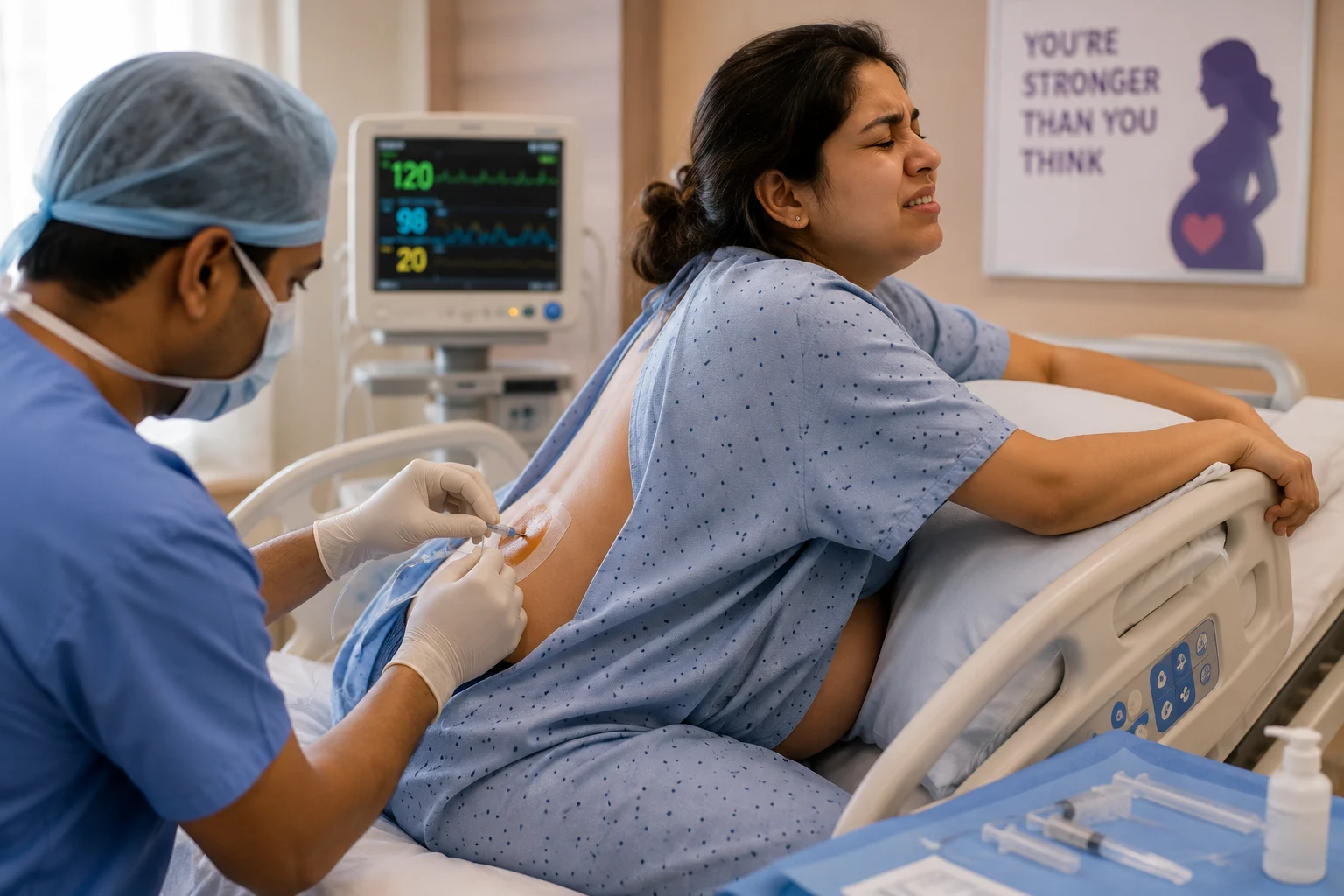
Epidural Analgesia in pregnancy is the most commonly used and effective method of pain relief during labour. The procedure consists of inserting a tiny catheter into the patient’s lower back through which the pain-relieving medications are administered to block pain signals from the lower part of the body.
The medication reduces sensation and pain in the lower part of the body while allowing the mother to remain awake and alert during labour and childbirth. Medical personnel pay close attention to the health of the mother and the child during the whole process.
Why Do Some Women Choose An Epidural?
Every labour is different, and the choice of pain relief depends on the mother’s preferences, medical condition, the progress of labour, and her gynecologist’s advice. Epidural Analgesia for vaginal delivery is one of the pain relief options that may be recommended after evaluating these factors, helping relieve labour pain while allowing the mother to remain awake during childbirth.
Some common reasons for choosing an epidural include
- Effective pain relief throughout labour
- Better comfort during prolonged contractions
- Ability to remain awake during childbirth and participate actively
- May reduce fatigue during prolonged labour
Procedure For Administering The Epidural
Cleaning of the lower back is performed with the use of an antiseptic agent. After that, a local anesthetic is administered to anesthetize the area. When the area gets numb, a needle is used to place a thin catheter into the epidural space. The needle is then removed, leaving only the catheter in place for administration of medication during labour.
What Medication Is Used?
A labor epidural generally contains a combination of a local anesthetic and a small dose of an opioid medication. These medicines work together to reduce pain while helping the mother remain comfortable and responsive during labour.
The medications are given in carefully controlled doses into the epidural space to block pain signals from the lower part of the body. The medications primarily act around the spinal nerves, with only minimal absorption into the bloodstream.
Does The Procedure Hurt?
Many pregnant women worry that an Epidural Analgesia may be painful. Before the procedure, the doctor injects a local anaesthetic into the lower back to numb the area, helping reduce discomfort during the insertion of the epidural needle and catheter.
After the skin is numbed with local anaesthetic, some women may feel pressure or brief discomfort while the epidural is being placed. Discomfort during catheter placement is much less than the pain from the contraction.
When Does The Pain Relief Begin?
Pain relief usually develops gradually over approximately 10–20 minutes. Many women continue to feel pressure during contractions while experiencing significant relief from pain.
Epidural Analgesia for labour provides pain relief through the catheter even after the medication is administered. The supply of pain medication can be increased or reduced as required during vaginal delivery with an epidural, based on the mother’s comfort and the progression of labour.
When Can An Epidural Be Given?
Women think that they have to wait until the labour process reaches a certain point before asking for an anesthetic. An epidural can generally be requested at any stage of labour, provided there are no medical contraindications and there is sufficient time for safe placement before delivery. There is no requirement to wait until a specific cervical dilatation before requesting epidural analgesia.
The administration of an Epidural Analgesia for normal delivery is avoided in case the baby is delivered shortly and also in case certain conditions preclude the administration of the anesthetic.
Does An Epidural Affect Labor Or The Baby?
Many pregnant women feel scared that an Epidural Analgesia may affect the baby or will be one of the reasons for delivering via cesarean. Epidural analgesia for natural delivery is not generally associated with an increased risk of fetal distress and does not automatically mean that a cesarean section will be required.
Modern epidural analgesia does not appear to increase the overall likelihood of Caesarean delivery.
Safety Of Epidural Analgesia During Labor
In general, for most healthy pregnancies, an epidural during normal delivery is considered a safe and effective method of labour pain relief for most women when administered by trained anaesthesia professionals. Regular monitoring allows the healthcare team to Assess maternal and fetal well-being during labour.
Each pregnancy is unique, and thus, medical consultation is necessary before settling on the pain reduction method. Discussion of the patient’s medical background and preferences enables selection of the best treatment method.
Some benefits of an Epidural Analgesia during labour include
- Effective relief from labour pain
- Better comfort during prolonged labour
- Allows the woman to remain awake during labour and childbirth.
- Reduced physical exhaustion before delivery
- May be useful to provide additional anaesthesia if an assisted vaginal delivery or emergency Caesarean section becomes necessary.
Who May Not Be A Suitable Candidate?
An Epidural Analgesia may not be recommended for every expectant mother. An epidural may not be suitable in certain circumstances, such as some bleeding disorders, significantly low platelet counts, the use of certain anticoagulant medications, infection at the proposed insertion site, or allergy to medications used in the procedure. Suitability is assessed individually by the anaesthesia team.
The obstetric and anaesthesia teams carefully review the mother’s medical history, current medications, overall health, and labour progress before recommending an epidural for labour pain.
Possible Side Effects and Complications of an Epidural
- Temporary fall in blood pressure
- Itching (with some opioid medications)
- Fever in prolonged labour (occasionally in some women)
- Temporary difficulty passing urine
- Headache (rare, due to accidental dural puncture)
- Incomplete or one-sided pain relief requiring adjustment or replacement of the epidural
- Rare serious complications, such as infection, bleeding around the spine, or nerve injury
- Serious complications are very rare when performed by experienced anaesthesia professionals
Common Misconceptions About Epidurals
A lot of misconceptions regarding epidurals cause unnecessary fear among pregnant women. It is important to understand the facts about epidural Analgesia for normal delivery so that women can make informed decisions based on medical advice rather than rumours and misconceptions.
Common Myths
Myth: Epidurals always cause Caesarean delivery.
Fact: Current evidence does not show that epidurals increase Caesarean rates.
Myth: Epidurals always cause chronic back pain.
Fact: Temporary soreness at the insertion site can occur, but epidural analgesia has not been shown to cause chronic back pain.
Myth: Epidurals harm the baby.
Fact: Epidural analgesia is generally considered safe for both mother and baby when appropriately administered and monitored. Temporary maternal or fetal effects can occur and are monitored during labour.
Making An Informed Birth Plan
All mothers have varying expectations of childbirth, which makes it necessary for pain relief methods to be discussed in all prenatal consultations. During antenatal visits, your gynecologist may discuss the signs of normal delivery and your pain-relief preferences as part of birth planning. However, you can also request or reconsider pain-relief options during labour based on your needs, the progress of labour, and your clinical condition.
Conclusion
Pain relief during labour should be individualised after discussion with your obstetrician and anaesthesiologist. Understanding the benefits, limitations, and suitability of an epidural can help you make an informed birth plan. An epidural can ease labour pain while helping many women stay awake and involved in delivery.
For guidance on labour pain management and birth planning, and normal delivery in Thane, you may consult Dr. Nikita Kulkarni, Consultant Obstetrician and Gynecologist in Thane, to discuss the pain-relief options that may be appropriate for your individual pregnancy.