Table of Contents
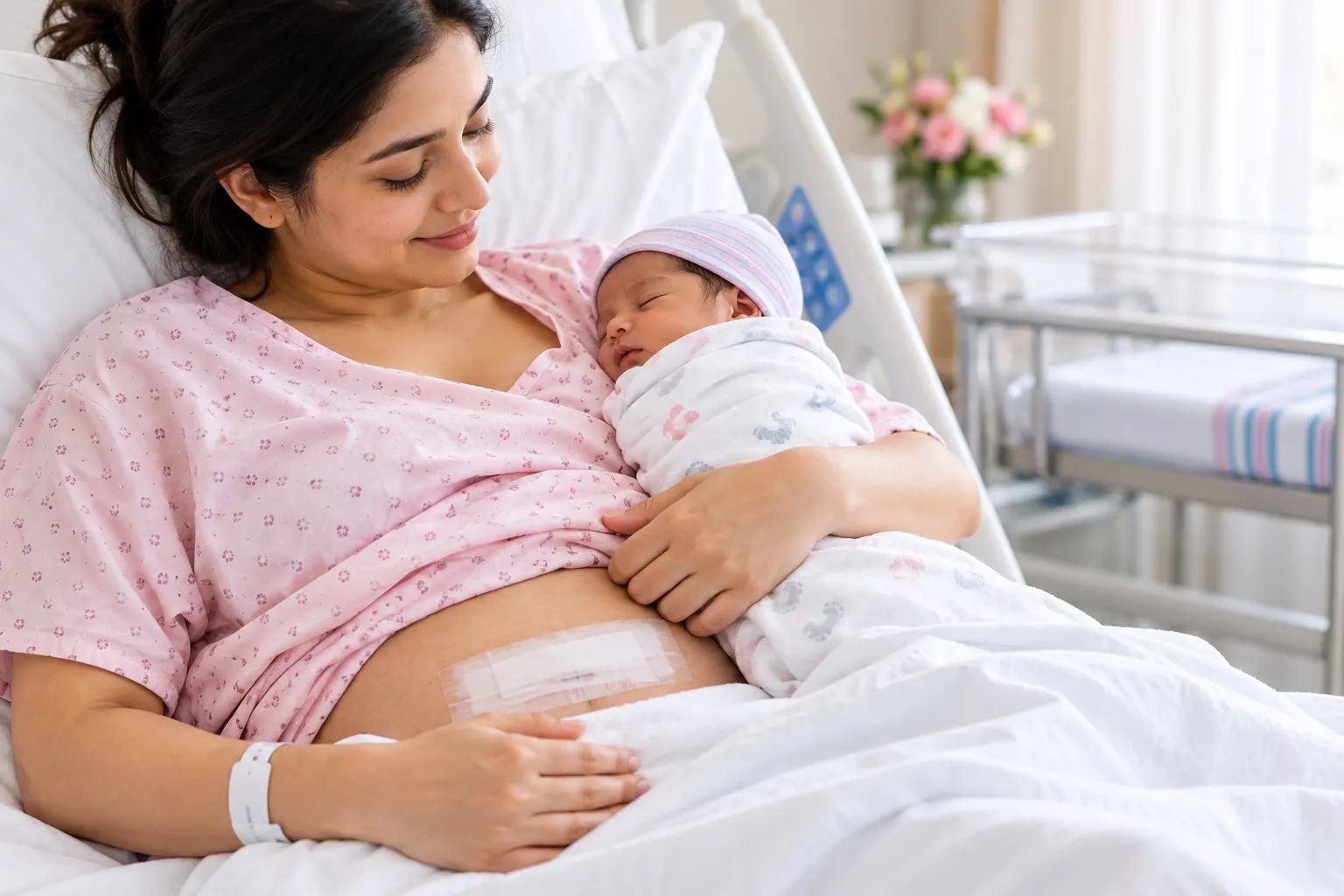
Recovery after a Caesarean section takes place over several weeks and varies between women. Because a C-section is a major abdominal operation performed around childbirth, recovery involves both surgical healing and normal postpartum changes. Adequate rest, gentle mobility, balanced nutrition, pain management and appropriate postpartum follow-up can support recovery.
A Caesarean section is a common mode of birth and may be recommended when it is considered the most appropriate option for the mother, baby, or pregnancy.
Every woman’s recovery is different and may depend on her overall health, circumstances surrounding the Caesarean delivery, surgical course and any associated complications.
Knowing what happens after surgery can help you prepare for each stage, manage discomfort and regain confidence while caring for your newborn.
Dr. Nikita Kulkarni, Consultant Obstetrician and Gynaecologist in Thane, provides individualised postpartum care and guidance during recovery after a C-section.
What Should You Expect in the Initial Days?
During the first few days after a Caesarean delivery, the body is recovering from surgery while also undergoing normal postpartum physical and hormonal changes. This will happen gradually; hence, you should be patient with your recovery process.
The following signs may occur:
- Pain from the incision – Mild pain, tenderness, or sensitivity around the surgical incision is common during the initial stages of recovery.
- Fatigue – This could be caused by blood loss during delivery, recovery from surgery and demands of caring for a newborn. Significant blood loss can contribute to anaemia and fatigue, and persistent or disproportionate tiredness may warrant evaluation.
- Uterine Contractions– Cramping may occur as the uterus gradually contracts towards its pre-pregnancy size and may be more noticeable during breastfeeding.
- Vaginal bleeding – Vaginal bleeding and discharge (lochia) occur after Caesarean as well as vaginal birth and typically decrease and change in colour over several weeks.
- Discomfort while moving – Some women may experience discomfort when standing, bending, coughing, laughing or changing position during the early recovery period.
- Emotional changes – Tearfulness, irritability or mood changes can occur during the early postpartum period. Persistent low mood, significant anxiety or difficulty coping should be discussed with a healthcare professional, while thoughts of self-harm or harming the baby require urgent medical attention.
- Increased need for assistance – Practical help with household activities and newborn care can allow more opportunities for rest during the early recovery period.
How Does Recovery Progress Week by Week?
Recovery after a C-section takes place gradually over several weeks, but the pace varies considerably between women. The recovery period after a C-section may also differ from that after a vaginal delivery, which is why understanding the differences in C-section vs normal delivery recovery can be helpful.
The following timeline is a general guide rather than a fixed schedule and may vary depending on the circumstances of delivery, surgical course, complications, anaemia, pain, sleep, feeding demands and individual healing.
- Week 1
In this phase, pain, swelling, and tiredness are quite common. Gentle walking supports circulation and helps reduce the risk of venous thromboembolism (blood clots) during postoperative recovery.
- Week 2
Movement may become easier during the second week, although some activities may still cause discomfort. Light household activities can be resumed gradually, while heavy lifting should be avoided during early recovery and resumed according to individual recovery and medical advice.
- Weeks 3 – 4
Energy levels gradually improve as the incision continues to heal. Some numbness around the incision may still occur. . Most women become more comfortable walking, but strenuous exercise should be avoided.
- Weeks 5 – 6
Many women feel considerably more comfortable by this stage, although complete recovery may take longer. Activity can be gradually increased according to individual recovery, and postpartum review provides an opportunity to discuss wound healing, pain, bleeding, contraception, exercise, sexual activity and any ongoing concerns.
Quick Recovery Timeline
| Recovery Stage | What You May Experience |
| Week 1 | Pain, swelling, tiredness, short walks encouraged |
| Week 2 | Reduced discomfort, easier movement, light activities |
| Weeks 3 – 4 | Better energy, healing incision, increased mobility |
| Weeks 5 – 6 | Continued recovery, gradually increasing activity and postpartum follow-up as advised |
When Can You Resume Driving, Exercise and Sexual Activity?
Driving: Resume driving when you can comfortably control the vehicle and perform an emergency stop without pain, and are no longer taking medication that may impair alertness.
Exercise: Gentle walking can usually begin early, while strenuous exercise should be resumed gradually according to recovery and medical advice.
Sexual activity: Sexual intercourse can generally be resumed after adequate healing when you feel physically comfortable and according to your doctor’s advice. The timing varies depending on recovery, bleeding, pain, wound healing and any complications.
What Can Support Recovery After a C-Section?
A smooth recovery requires taking proper care of your body. Recovery after a C-section is supported by adequate pain control, gradual mobility, appropriate wound care, balanced nutrition, rest and medical follow-up. Activity should be increased gradually according to individual recovery and your doctor’s advice.
The following C-section recovery tips will be helpful for you:
- Use medication as advised – Adequate pain control can make it easier to move, rest, feed and care for your baby during the early recovery period. Take prescribed medications according to your doctor’s advice.
- Keep gently mobile – Gentle mobility such as early walking is encouraged to improve circulation and reduce thromboembolic risk, while strenuous exercise and heavy lifting should wait until recovery is adequate.
- Avoid Heavy Lifting – Avoid heavy lifting during early recovery. In the first few weeks, many women are advised not to lift anything significantly heavier than their baby, but restrictions should be individualised according to your surgeon’s advice.
- Incision and wound care – Keep the incision clean and dry according to your doctor’s instructions. Supporting the abdomen with a pillow while coughing or sneezing may reduce discomfort. Seek medical advice for increasing redness, swelling, discharge, wound separation, worsening pain or fever.
- Wear comfortable clothing – Loose-fitting clothing and underwear that does not rub or place pressure on the incision may be more comfortable during early recovery.
- Maintain balanced nutrition and hydration – Include protein-rich foods, fruits, and vegetables in your diet, and drink adequate fluids to stay hydrated during recovery.
- Rest whenever possible – Rest helps your body recover. Prioritise rest when opportunities arise and accept practical help with household tasks and newborn care where available.
- Bowel and bladder care – Constipation can occur postpartum, particularly with reduced mobility, dehydration, iron supplements and some pain medications, while difficulty passing urine, painful urination, severe constipation or new urinary symptoms should be discussed with your doctor.
How Should You Care for Your Surgical Scar?
Taking proper care and following your doctor’s advice can support the healing of the incision. However, the scar can take several months to fully mature and gradually fade. Appropriate wound care can support healing and help identify signs of infection early.
Consider the following guidelines:
- Gently clean the incision area and pat it dry with a clean towel.
- Do not scratch or rub the incision.
- Avoid applying creams, oils or other products to the incision until it has healed or unless advised by your doctor.
- Avoid clothing that rubs against or places pressure on the healing incision.
When Should You Seek Urgent Medical Care After a C-Section?
- Worsening abdominal or incision pain
- Fever
- Heavy bleeding or rapidly increasing vaginal bleeding, passage of large clots, or bleeding associated with dizziness/fainting
- Redness, swelling, pus or discharge from the wound
- Foul-smelling vaginal discharge
- Chest pain or shortness of breath
- One-sided calf pain/swelling
- Severe headache, visual symptoms or seizures
- Very high blood pressure (if measured) or upper abdominal/epigastric pain
- Sudden worsening swelling of the face or hands
- Thoughts of harming oneself or the baby
- Difficulty passing urine or markedly reduced urine output
- Persistent vomiting or inability to tolerate fluids
- Breast redness, severe breast pain or fever, particularly when breastfeeding
Summing Up
Recovery after a Caesarean delivery is gradual and varies between women. Adequate pain control, gentle mobility, appropriate wound care, balanced nutrition, rest and postpartum follow-up can support recovery.
Seek medical attention promptly for heavy bleeding, fever, worsening pain, wound changes, breathing difficulty, unilateral leg swelling, severe headache or other concerning symptoms.
Dr. Nikita Kulkarni, Consultant Obstetrician and Gynecologist in Thane, provides care during pregnancy, childbirth and the postpartum period.
Women seeking guidance regarding cesarean delivery in Thane and postpartum recovery can consult Dr. Nikita Kulkarni for individualised care.